STATEMENT
PRINTS
Get Wild, Join the Society.


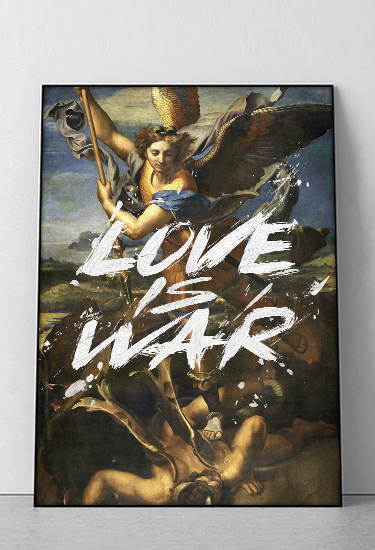


WILD, WICKED AND FREE
Wild Society is er voor iedereen die helemaal klaar is met saaie muren, standaard posters en de uitgemolken retro prints. Wij creëren digital artworks door middel van mixed media. Geprint op museum-kwaliteit papier. Voor een uitgesproken, gewaagde en vooral uitdagende look in je woonkamer.
Wij doen niet aan massaproductie. Elk design wordt uitgebracht in een uitgave van maximaal 50 prints. Zijn er 50 verkocht, dan gaat het design uit de verkoop! Zo behouden we originaliteit en is jouw print altijd uniek.

ORIGINAL & CUSTOM ARTWORKS
Van een kleine selectie designs is het original artwork verkrijgbaar. Kick je op het reliëf van de verf, of ga je gewoon lekker op een 100% uniek stuk kunst in je slaapkamer? Check dan onze Original Artworks
Examples do more than decorate an explanation: they show how an idea behaves under specific conditions, making abstract rules easier to understand and apply. In education, the strongest examples are carefully chosen to reveal both the method and the reasoning behind it, rather than simply displaying a correct result. A short test built around a realistic example can measure whether learners understand the underlying principle, because it requires them to transfer that principle to a fresh situation. The same approach works in technical writing, where a compact code sample, worked calculation, or comparison table can expose assumptions that broad statements leave hidden. Variety also matters; pairing a typical case with a boundary case helps readers distinguish a reliable pattern from an accidental detail. When examples are accurate, relevant, and explained in context, they become practical tools for learning, evaluation, and clearer decision-making.
Examples are most persuasive when they clarify an idea rather than merely decorate an argument. In classrooms, for instance, a carefully chosen case can turn an abstract principle into something students can examine, question, and remember. A practical test example should show the condition being measured, identify the relevant evidence, and make clear why the result matters. That structure is especially valuable in science and public policy, where context, comparison, and repeatable methods often determine whether a claim deserves confidence. Strong examples also acknowledge their limits: one observation may illuminate a pattern without proving that the pattern applies everywhere. Editorial writing benefits from the same discipline, pairing vivid detail with enough explanation to keep illustration from being mistaken for evidence.